Thursday, October 13, 2016

10 Contemporary Philosophers in the world still 2016

10 Contemporary Philosophers


From philosophy of mind to language, from logic to feminism, get to know some of the world’s brightest intellects.

There is a popular misconception that philosophy has been dead since the glorious golden age of Plato and Aristotle, or, at the very least, Kant and Hegel. However, this glorious intellectual enterprise is today alive and kicking and produces output admirable for its sharpness, profundity, and richness. From fields as obscure as modal epistemology, to more common ones such as feminism and ethics, here are 10 leaders of today’s best achievements of the human mind.


Martha Nussbaum (b. 1947)


Martha Nussbaum

In a field severely dominated by men, even more so than hardcore sciences, Martha Nussbaum compensates for this in two ways. Originally hailing from New York, she is now a professor at the University of Chicago, she is a passionate and fervent advocate of women’s rights and her views on feminism are elaborate, bold, and always fruitfully controversial. Her open confrontation with another feminist philosopher of a different school of thought, Judith Butler, in the later 90s made history and, in the end, promoted the feminist cause to new heights. Moreover, the sheer volume of her output makes her one of the most laborious and productive philosophers in ethics and political science, with significant work on animal rights, emotions, and gay rights.


Cornel West (b. 1952)

Cornel West

West is a heavy hitter in social philosophy, having pioneered the school of “neopragmatism” with a focus on the condition of race and class in America. West was the first African-American to receive a Ph.D. in philosophy from Princeton University in 1980. West has penned some massively influential texts, including Race Matters (1994), in which he uses moral authority to address race and social issues, as well the socio-political text Democracy Matters (2004). West is also among the most public living philosophers appearing on several talk shows, including CNN and the Colbert Show, and has even been parodied on Saturday Night Live. He is currently a Professor of Philosophy and Christian Practice at the Union Theological Seminary in New York City.


Gayatri Spivak (b. 1942)

Gayatri Spivak

Arguably the most influential contemporary philosopher to hail from the Indian subcontinent, Spivak has spent her career turning post-colonial theory on its head. With her influential critique “Can the Subaltern Speak?” she ushered in the concept of the subaltern, the study of populations who live below normal social and hegemonic power structures. She is also renowned for her translation of  Jacques Derrida’s De la grammatologie, a text that laid the foundations for Deconstructionism, in which she contributed an impactful introduction. She is the recipient of the Kyoto Prize in Arts and Philosophy and India’s Padma Bhushan for her contributions to literary and cultural theory. Spivak is a founding member of the Institute for Comparative Literature and Society at Columbia University, where she teaches.


Slavoj Žižek (b. 1949)

Slavoj Žižek

Known for his idiosyncratic approach to psychoanalytic philosophy and cultural criticism, Žižek’s doesn’t spare either the political right or the liberal left in his anti-capitalist and neo-liberal criticism. Žižek’s career has mostly focused on developing a school of thought based on authentic experiences, what he calls “The Real”, and his work infamously bounces from from the high-brow masterpiece The Sublime Object of Ideology (1989) to the low-brow antithetical work The Pervert’s Guide to Ideology (2012). Because of his willingness to explore low-cultural tropes, and bring them into philosophic discourse, he has achieved wide cultural acclaim. Žižek has cited as a “a celebrity philosopher,” the “Elvis of Cultural Theory” and “the most dangerous philosopher in the West.” He teaches at New York University.


Judith Butler (b. 1956)

Judith Butler

Butler has had a seminal impact on feminism and gender philosophy since the publication of her treatises Gender Trouble: Feminism and the Subversion of Identity and Bodies That Matter: On the Discursive Limits of Sex. She is widely credited for developing a theory based around the social construction of gender. Her work is influenced by philosopher Michel Foucault, to which she has cited in her arguments that the language of gender has been pushed to necessity from the desire of powers to censor any deviation from heterosexuality. Along with being a voice for LGBTQ issues, Butler, who is Jewish, has been a vocal critic of Israeli politics, a stance that led to certain Israeli leaders to protest her selection for the Theodor Adorno Prize, an award given for outstanding achievements in philosophy.


Gu Su (b. 1955)

Gu Su

Chinese philosopher Gu Su has had the precarious position of introducing liberal philosophies into Chinese culture. Having been the recipient of both a Eastern and Western education (Nanjing and Duke), he published the massively influential Essential Ideas of Liberalism which has been published in both Taiwan and mainland China, in which he argued for the benefits of liberal policies within the Chinese political system. In 2010, he worked with fellow Chinese philosopher Yu Keping on the anthology: Democratization: The Chinese Model and Course of Political Development. Gu Su is member of editorial Board of the journal NanoEthics and currently a Senior Fellow at the Institute for the Advanced Study of Social Sciences at Fudan University.


Thomas Nagel (b. 1937)

Thomas Nagel

Another major philosopher working from the U.S., Thomas Nagel was however born in Belgrade, Yugoslavia (now Serbia). He currently teaches philosophy and law at New York University, his intellectual home that he has not abandoned since 1980. His influential essay ‘What is it like to be a bat?’ opened new ways in which philosophers see the human mind, attacking what is often called reductionism – the claim that mental states are, in one way or another, just brain, physical states. Nagel has been a prominent public intellectual too, however, his most notable work being another essay, ‘War and Massacre’, which launched a harsh critique on American war policies in Vietnam, in the early 70s.


John McDowell (b. 1942)

John McDowell 

McDowell to the rare but honorable tradition of anti-philosophers, dating back at least to its chief originator, Ludwig Wittgenstein. This line of philosophers do not really seek solutions to philosophical problems but dissolutions; that is, they deny that the problems are indeed problems in the first place. Born in South Africa, and now a professor at the University of Pittsburgh, John McDowell has exhibited extraordinary philosophical repertoire, his theories stemming from Kant to Wittgenstein and from Hegel to Sellars. In tandem with his anti-philosophy also goes some degree of pragmatism, roughly the view that what really matters about theories that explain reality is not their truth but the fact that they actually work.


David Chalmers (b. 1966)

David Chalmers

Another example of an ‘unorthodox’ philosopher, Chalmers too belongs to the New York University crew of star philosophers, but also teaches at the Australian National University. Advertised by the press as one of the best books of the year of its publication, The Conscious Mind is his magnum opus, where he revives the long dead worldview of dualism, going as far back as Rene Descartes and the 16th century. Dubbing it ‘naturalistic dualism’, his philosophy argues to the effect that the properties of the mind are of a significantly different kind of the properties of the rest of the physical world.


Saul Kripke (b. 1940)

Saul Kripke

Another multitasker of a philosopher, Saul Kripke is an American philosopher, currently emeritus professor at Princeton University, who has spread his wings across philosophy of language, logic, philosophy of mathematics, metaphysics, and epistemology. Listed in the top ten of the most influential philosophers of the past 200 years in a recent poll, this titan made it to fame with his book “Naming and Necessity”, where he argues that certain true statements are necessarily so, that is they cannot be conceived to be false, although they cannot be discovered just by armchair reasoning, like mathematics. They need empirical discovery. His quirky reading of L. Wittgenstein has come to be known in philosophical argot by the portmanteau ‘Kripkestein’.


*Thanks for reading... if you like it then please like, share & leave a special comments of yours...


Wednesday, October 12, 2016

Motivating Quotes on Success 101

Motivating Quotes on Success


We all want it in some way.

In school or in our careers. In relationships with our children, partner, friends, someone we just started seeing and with ourselves. With our mental and physical health.

But how do you find success? And what is success?

This week I’d like to get help from the people who walked this earth before us (and from some who are still here). I’d like to share timeless advice that was as helpful 2000 years ago as it is now.

This is 101 thought-provoking, motivating, useful and sometimes funny quotes on success.


01. “Success means doing the best we can with what we have. Success is the doing, not the getting; in the trying, not the triumph. Success is a personal standard, reaching for the highest that is in us, becoming all that we can be.”
– Zig Ziglar

02. “Success is not the key to happiness. Happiness is the key to success. If you love what you are doing, you will be successful.”
– Herman Cain

03. “Do not be embarrassed by your failures, learn from them and start again.”
– Richard Branson

04. “Success is simple. Do what’s right, the right way, at the right time.”
– Arnold H. Glasgow

05. “Victory is sweetest when you’ve known defeat.”
– Malcolm S. Forbes

06. “Action is the foundational key to all success.”
– Pablo Picasso

07. “The best years of your life are the ones in which you decide your problems are your own. You do not blame them on your mother, the ecology, or the president. You realize that you control your own destiny.”
– Albert Ellis

08. “I cannot give you the formula for success, but I can give you the formula for failure which is: Try to please everybody.”
– Herbert B. Swope

09. “You’ve got to get up every morning with determination if you’re going to go to bed with satisfaction.”
– George Lorimer

10. “Success is going from failure to failure without losing enthusiasm.”
– Winston Churchill

11. “If you want to make an easy job seem mighty hard, just keep putting off doing it.”
– Olin Miller

12. “The successful man is the one who finds out what is the matter with his business before his competitors do.”
– Roy L. Smith

13. “Love yourself first and everything else falls into line. You really have to love yourself to get anything done in this world.”
– Lucille Ball

14. “Success is not measured by what you accomplish, but by the opposition you have encountered, and the courage with which you have maintained the struggle against overwhelming odds.”
– Orison Swett Marden

15. “Success does not consist in never making mistakes but in never making the same one a second time.”
– George Bernard Shaw

16. “I attribute my success to this: I never gave or took any excuse.”
– Florence Nightingale

17. “Love many things, for therein lies the true strength, and whosoever loves much performs much, and can accomplish much, and what is done in love is done well.”
– Vincent Van Gogh

18. “Follow effective actions with quiet reflection. From the quiet reflection will come even more effective action.”
– Peter Drucker

19. “You have to learn the rules of the game. And then you have to play better than anyone else.”
– Albert Einstein

20. “Amateurs sit and wait for inspiration, the rest of us just get up and go to work.”
– Stephen King

21. “Things may come to those who wait, but only the things left by those who hustle.”
– Abraham Lincoln

22. “Don’t let what you cannot do interfere with what you can do.”
– John R. Wooden

23. “Life isn’t about finding yourself. Life is about creating yourself.”
– George Bernard Shaw

24. “Not he who has much is rich, but he who gives much.”
– Erich Fromm

25. ”Spend eighty percent of your time focusing on the opportunities of tomorrow rather than the problems of yesterday.”
– Brian Tracy

26. “If the only tool you have is a hammer, you tend to see every problem as a nail.”
– Abraham Maslow

27. “Keep on going, and the chances are that you will stumble on something, perhaps when you are least expecting it. I never heard of anyone ever stumbling on something sitting down.”
– Charles F. Kettering

28. “The distance between insanity and genius is measured only by success.”
– Bruce Feirstein

29. “Success means having the courage, the determination, and the will to become the person you believe you were meant to be.”
– George Sheehan

30. “Never limit yourself because of others’ limited imagination; never limit others because of your own limited imagination.”
– Mae Jemison

31. “Whenever you’re in conflict with someone, there is one factor that can make the difference between damaging your relationship and deepening it. That factor is attitude.”
– William James

32. “To succeed in life, you need two things: ignorance and confidence.”
– Mark Twain

33. “Take up one idea. Make that one idea your life – think of it, dream of it, live on that idea. Let the brain, muscles, nerves, every part of your body, be full of that idea, and just leave every other idea alone. This is the way to success, that is way great spiritual giants are produced.”
– Swami Vivekananda

34. “The secret of success in life is for a man to be ready for his opportunity when it comes.”
– Benjamin Disraeli

35. “There are two types of people who will tell you that you cannot make a difference in this world: those who are afraid to try and those who are afraid you will succeed.”
– Ray Goforth

36. “Don’t wait. The time will never be just right.”
– Napoleon Hill

37. “You can teach a student a lesson for a day; but if you can teach him to learn by creating curiosity, he will continue the learning process as long as he lives.”
– Clay P. Bedford

38. “After every difficulty, ask yourself two questions: “What did I do right?” and “What would I do differently?”
– Brian Tracy

39. “Don’t brood. Get on with living and loving. You don’t have forever.”
– Leo Buscaglia

40. “Doing the best at this moment puts you in the best place for the next moment.”
– Oprah Winfrey

41. “Life’s real failure is when you do not realize how close you were to success when you gave up.”
– Unknown

42. “If you’re going through hell, keep going.”
– Winston Churchill

43. “Be miserable. Or motivate yourself. Whatever has to be done, it’s always your choice.”
– Wayne Dyer

44. “The first step toward success is taken when you refuse to be a captive of the environment in which you first find yourself.”
– Mark Caine

45. “In a moment of decision, the best thing you can do is the right thing to do, the next best thing is the wrong thing, and the worst thing you can do is nothing.”
– Theodore Roosevelt

46. “Never idealize others. They will never live up to your expectations. Don’t over-analyze your relationships. Stop playing games. A growing relationship can only be nurtured by genuineness. “
– Leo F. Buscaglia

47. “For success, attitude is equally as important as ability.”
– Harry F. Banks

48. “Nothing in the world can take the place of perseverance. Talent will not; nothing is more common than unsuccessful people with talent. Genius will not; unrewarded genius is almost legendary. Education will not; the world is full of educated derelicts. Perseverance and determination alone are omnipotent.”
– Calvin Coolidge

49. “Judge your success by what you had to give up in order to get it.”
– Dalai Lama

50. “Your work is discover your world and then with all your heart give yourself to it.”
– Buddha

51. “People who succeed have momentum. The more they succeed, the more they want to succeed, and the more they find a way to succeed. Similarly, when someone is failing, the tendency is to get on a downward spiral that can even become a self-fulfilling prophecy.”
– Tony Robbins

52. “Success usually comes to those who are too busy to be looking for it.”
– Henry David Thoreau

53. “You can make more friends in two months by becoming interested in other people than you can in two years by trying to get other people interested in you.”
– Dale Carnegie

54. “Success is largely a matter of holding on after others have let go.”
– Unknown

55. “Aim for success, not perfection. Never give up your right to be wrong, because then you will lose the ability to learn new things and move forward with your life. Remember that fear always lurks behind perfectionism.”
– David M. Burns

56. “Start where you are. Use what you have. Do what you can.”
– Arthur Ashe

57. “Success seems to be connected with action. Successful people keep moving. They make mistakes, but they don’t quit.”
– Conrad Hilton

58. “The difference between a successful person and others is not a lack of strength, not a lack of knowledge, but rather a lack of will.”
– Vince Lombardi

59. “Keep away from people who try to belittle your ambitions. Small people always do that, but the really great make you feel that you, too, can become great.”
– Mark Twain

60. “Success is how high you bounce when you hit bottom.”
– George S. Patton

61. “Ever tried. Ever failed. No matter. Try Again. Fail again. Fail better.”
– Samuel Beckett

62. “What seems to us as bitter trials are often blessings in disguise.”
– Oscar Wilde

63. “Don’t wait until everything is just right. It will never be perfect. There will always be challenges, obstacles and less than perfect conditions. So what. Get started now. With each step you take, you will grow stronger and stronger, more and more skilled, more and more self-confident and more and more successful.”
– Mark Victor Hansen

64. “Your attitude, not your aptitude, will determine your altitude.”
– Zig Ziglar

65. “If you don’t value your time, neither will others. Stop giving away your time and talents. Value what you know and start charging for it.”
– Kim Garst

66. “The successful warrior is the average man, with laser-like focus.”
– Bruce Lee

67. “Some of the biggest challenges in relationships come from the fact that most people enter a relationship in order to get something: they’re trying to find someone who’s going to make them feel good. In reality, the only way a relationship will last is if you see your relationship as a place that you go to give, and not a place that you go to take.”
– Anthony Robbins

68. “Nothing is less productive than to make more efficient what should not be done at all.”
– Peter Drucker

69. “Live as if you were to die tomorrow. Learn as if you were to live forever.”
– Mahatma Gandhi

70. “Try not to become a person of success, but rather try to become a person of value.”
– Albert Einstein

71. “Before anything else, preparation is the key to success.”
– Alexander Graham Bell

72. “The road to success is always under construction.”
– Lily Tomlin

73. “If people did not do silly things, nothing intelligent would ever get done.”
– Ludwig Wittgenstein

74. “Every great dream begins with a dreamer. Always remember, you have within you the strength, the patience, and the passion to reach for the stars to change the world.”
– Harriet Tubman

75. “I find that the harder I work, the more luck I seem to have.”
– Thomas Jefferson

76. “If you don’t design your own life plan, chances are you’ll fall into someone else’s plan. And guess what they have planned for you? Not much.”
– Jim Rohn

77. “Procrastination is the fear of success. People procrastinate because they are afraid of the success that they know will result if they move ahead now. Because success is heavy, carries a responsibility with it, it is much easier to procrastinate and live on the ‘someday I’ll’ philosophy.”
– Denis Waitley

78. “Don’t let the fear of losing be greater than the excitement of winning.”
– Robert Kiyosaki

79. “Striving for success without hard work is like trying to harvest where you haven’t planted.”
– David Bly

80. “Success is focusing the full power of all you are on what you have a burning desire to achieve.”
– Wilfred Peterson

81. “Whenever you see a successful person, you only see the public glories, never the private sacrifices to reach them.”
– Vaibhav Shah

82. “For most of life, nothing wonderful happens. If you don’t enjoy getting up and working and finishing your work and sitting down to a meal with family or friends, then the chances are you’re not going to be very happy. If someone bases his/her happiness on major events like a great job, huge amounts of money, a flawlessly happy marriage or a trip to Paris, that person isn’t going to be happy much of the time.
If, on the other hand, happiness depends on a good breakfast, flowers in the yard, a drink or a nap, then we are more likely to live with quite a bit of happiness.”
– Andy Rooney

83. “Success is the sum of small efforts, repeated day-in and day-out.”
– Robert Collier

84. “I’ve missed more than 9000 shots in my career. I’ve lost almost 300 games. 26 times, I’ve been trusted to take the game winning shot and missed. I’ve failed over and over and over again in my life. And that is why I succeed.”
– Michael Jordan

85. “The best revenge is massive success.”
    – Frank Sinatra

86. “Take time to deliberate; but when the time for action arrives, stop thinking and go in.”
    – Napoleon Bonaparte

87. “Twenty years from now you will be more disappointed by the things that you didn’t do than by the ones you did do. So throw off the bowlines. Sail away from the safe harbor. Catch the trade winds in your sails. Explore. Dream. Discover.”
   – Mark Twain

88. “Success comes in cans; failure in can’ts.”
   – Unknown

89.“Patience, persistence and perspiration make an unbeatable combination for success.”
   – Napoleon Hill

90. “Life will bring you pain all by itself. Your responsibility is to create joy.”
   – Milton Erickson

91. “The question isn’t who is going to let me; it’s who is going to stop me.”
   – Ayn Rand

92. "If A equals success, then the formula is A equals X plus Y and Z, with X being work, Y play,              and Z keeping your mouth shut.”
   – Albert Einstein

93. “If I had eight hours to chop down a tree, I’d spend six hours sharpening my ax.”
   – Abraham Lincoln

94. “If you are not willing to risk the usual, you will have to settle for the ordinary.”
    – Jim Rohn

95. “The best way to succeed in this world is to act on the advice you give to others.”
     – Unknown

96. “Success is not final, failure is not fatal: it is the courage to continue that counts.”
      – Winston Churchill

97. “You don’t have to see the whole staircase, just take the first step.”
       – Martin Luther King, Jr.

98. “We become what we think about most of the time, and that’s the strangest secret.”
       – Earl Nightingale

99. “Our greatest fear should not be of failure … but of succeeding at things in life that don’t really             matter.”
         – Francis Chan

100. “A year from now you may wish you had started today.”
        – Karen Lamb

101. “To laugh often and much; to win the respect of intelligent people and the affection of children… to leave the world a better place… to know even one life has breathed easier because you have lived. This is to have succeeded.”
– Ralph Waldo Emerson

What is your favorite quote on success? Feel free to share the best one(s) you have found in this article or in your life in the comments section below.


*Thanks for reading... if you like it then please like, share & leave a special comments of yours...

Monday, October 10, 2016

most dangerous rivers and lakes in the world


10 most dangerous rivers and lakes in the world


Lake of Death,  (Italy)

Lake of Death


Want to drop everything in this stuffy town and get away from the August heat to the beach, close to the water, but can not? Offer a look at our selection - possibly desire disappears.

On the island of Sicily, became famous for the destructive power of the volcano Etna and no less frightening, though not exhibited at the show, the government mafia clans, there is a very dangerous attraction. Waters of Lake of Death , which are inherently not water at all, and concentrated sulfuric acid, so destructive, it is the place of the current perceptions of Sicily rumored Cosa Nostra used to hide the bodies of their unfortunate enemies. In a few minutes the deadly pond, fed by two underground sources with H2SO4, destroys any organic matter, leaving around a lifeless space.


River Rio Tinto, (Spain)

River Rio Tinto


Red like blood, water of the Rio Tinto, which has its origin in the Spanish province of Huelva and flowing of Andalusia, unattractive, not only externally. Due to the high concentrations of metals originating from copper, silver and gold mines, this body of water got fame as one of the most acidic sites in the world.Water, pH-factor which varies within 1.7-2.5 and practically corresponds to the acidity of gastric juice, dangerous for any living creature. The only inhabitants of "Martian rivers" are favorite scientists aerobic bacteria extremophile, eating iron.


Black Hole Lake, (Russia)

Black Hole Lake


A few years ago, according to the instructions of the President of the Russian Federation, marshy lake black hole, located between Nizhny Novgorod and Dzerzhinsk, should fill with sand and bulldoze. The reason for such barbaric attitude to the pond is simple - the object of the socialist heritage, Solid waste plant "Plexiglas", recognized as one of the most polluted in the world. The stench emanating from the black hole is so strong that even interrupts fumes from fires covering Russia during the hot summer days, and the fluid that fills the lake, and at all resembles a caustic black resin, sucking all life.


Yangtze River, (China)

Yangtze River


The third longest river of the world, second only to the Amazon and the Nile in length, exceeds them in another, it is not as positive. Due to the fact that 17,000 Chinese settlements along the banks of the Yangtze, have no sewage systems, waste all their vital functions are discharged into the pond without filtration. Do not add purity river and numerous chemical plants, steel and oil complexes as well as regular transport of dangerous goods. According to the most conservative estimates, the volume of contaminated water into the main waterway of China reached 34 billion tons and continues to grow.


Lake Karachay, (Russia)

Lake Karachay


More recently, one hour spent on the shores of Lake Karachay in the Urals, was enough to meet a painful death due to exposure to 600 X-rays. All the fault of the explosion, which occurred on the storage of fissile materials plant "Mayak" in 1957 and was the cause of the unprecedented pollution of the river Techa cascade and its ponds. Although every year the company receives several million rubles for disaster management, groundwater continue to spread deadly radiation. Fortunately, according to recent studies the situation in the area of ​​Lake Karachay is gradually improving.


The Amazon River, (South America)

The Amazon River


Danger of the deepest rivers in the world, which is considered one of the seven natural wonders of the world, is not only in its power. Artery, every second pouring into the Atlantic Ocean about 220 thousand cubic meters of water, and awarded the title "River Sea", is teeming with bloodthirsty monsters. Here live voracious piranhas, ruthless black caimans, enormous anaconda, giant carnivorous Arkaima and small, but no less terrible candiru parasites that enter the urinary system. Amazon is full of impassable swamps and bogs deadly, and its spill forming high tidal waves, devastating for fields and villages.


Boiling Lake, (Dominican Republic)

Boiling Lake


On the lake, located near the valley of despair in the Dominican National Park Morne Trois Pitons, walks notoriety. If inadvertently plunge here in the dry season, you can easily boil alive, echoing the way overbearing king of "The Little Humpbacked Horse". The water temperature in the center of the Boiling Lake, enveloped in thick white vapor reaches 92 ° C and is suitable except for tea. This body of water was the cause of so many accidents, even in the rainy season, when the lake is relatively cool to swim here is strictly prohibited.


Ganges River, (India)

Ganges River


Indian epic "Ramayana" says that the waters of the sacred river Ganges have the power to return the dead to life and get rid of ailments. Unfortunately, the reality is far from the myths: the main river of India is included in the list of the most fouled waters of the world. Flocking here many production waste and feces coming from the overcrowded cities. Even bathing in the Ganges, the number of enterobacteria which is 120 times higher than normal, leading to infection and each year causes the death of thousands of people . Among the problems that could interfere with purification of the sacred pond, and added a ritual burial of bodies in Varanasi.


Onondaga Lake, (United States)

Onondaga Lake


In the XIX century Onondaga Lake, located near the American Syracuse, was a popular place to stay.A century later, the pond, fell under the impact of technological "progress" on the brink of ecological disaster. In 1901, Onondaga water saturated due to the discharge of industrial waste nitrates, phosphates, mercury, and pathogenic bacteria, banned the use in the food industry. In 1940, it was vetoed by bathing, and in 1970 - and fishing. After the ban on waste disposal, sewage treatment facilities and installation of the enactment of clean water to the lake situation is gradually improving, but cleaned the pond for a long time.


Tsitarum River, (Indonesia)

Tsitarum River


With the advent of advanced technologies along the shores of the once beautiful, now one of the most intoxicated in the nature of rivers, located on the island of Java, has grown more than five hundred plants. Pond, first served source of income for many fishermen, has been home to other hunters - hunters debris. Muddy water, teeming with bacteria and invisible under a thick layer of household and industrial waste, is still used for drinking and irrigation. Scientists predict that in the coming years Tsitaruma pollution reaches a critical level, and may lead to a shutdown of the largest hydroelectric power station in Java.


*Thanks for reading... if you like it then please like, share & leave a special comments of yours...


Sunday, October 9, 2016

World’s Greatest Scientists of all Time


Top 10 World’s Greatest Scientists of all Time


Our understanding of the world around us and the world that we have come to inhabit, the technological era, is a gift of the work of numerous scientists. We live in a progressive world, one that is fast growing, and this growth and progression is a product of science and those of study it: scientists. Almost everything of importance, automobiles, electricity, healthcare, and learning is a result of experiments, inventions and discoveries of these intellectuals. Had it not been for them we would still be in the Dark Ages. We literally owe our lives to them. It is hard to imagine a world without the benefits we have come to take for granted. Though scientific expertise is hard to come by and requires years of training and hard work, there is no denying the significance of these scientists in our lives. There is much to learn from them, from their single minded, focussed determination in the face of disbelievers, they serve a lesson in life. These are ten of the world’s greatest scientists whose inventions have changed the course of our lives.


1.  Isaac Newton

Isaac Newton (1642-1727)


Sir Isaac Newton, an English physicist and mathematician, is widely regarded as one of the greatest scientists of all time. Newton’s contribution to science is wide and unparalleled. His field of work such as the laws of motion is still being followed in schools and colleges as the basis of scientific understanding. His genius can be gauged from the fact that he discovered gravity from the simple act of an apple falling from the tree. Newton also validated the heliocentric model of the cosmos, built the first telescope, formulated empirical law of cooling and studied the speed of sound. As a mathematician Newton contributed to infinitesimal calculus, power series, binomial theorem and method for approximation of roots of a function.


2. Albert Einstein

Albert Einstein (1879-1955)


Albert Einstein, a German-born theoretical physicist, was awarded the Nobel Prize in 1921 for the discovery of the law of photoelectric effect.  But his most important piece of work is the theory of relativity which along with quantum mechanics forms the basis for modern physics. He also formulated mass-energy equivalence relation E=m which is dubbed as the world’s most famous equation. He also collaborated with other scientists on works such as the Bose-Einstein statistics. Einstein’s letter to President Roosevelt in 1939, alerting him of possible nuclear weapons, is supposed to be a key stimulus in the development of the atomic bomb by the USA. Einstein considers this to be the biggest mistake of his life.


3. James Clerk Maxwell

James Clerk Maxwell (1831-1879)


Maxwell, a Scottish Mathematical physicist, introduced the concept of electromagnetic field through a set of equations. He showed that light and electromagnetic field travel at the same speed. In 1861, Maxwell took the first colour photograph after studies in the field of optics and colour vision. Maxwell’s work on thermodynamics and kinetic theory also helped other scientists in the field. The Maxwell-Boltzmann distribution is the result one such development. His contributions to physics laid the foundation for future research, such as those in relativity and quantum mechanics and put him the league of prominent physicists.


4. Louis Pasteur

 Louis Pasteur (1822-1895)


Louis Pasteur, French chemist and microbiologist, is the man behind the process of pasteurization, the reason why we are able to drink milk without breeding cows. Pasteur made discoveries in vaccination and created vaccines for rabies and anthrax. He also studied the causes and prevention of diseases, thus saving many lives. He contributed to the germ theory of disease and its application in clinical medicine. All of this led to Pasteur being titled the “father of microbiology”.  Pasteur’s discoveries in the field of chemistry include those on asymmetry of crystals and racemisation. He established the Pasteur institute to further his goal of research and application of science.


.  05. Charles Darwin (1809-1882)

Charles Darwin (1809-1882)


Charles Darwin has been described as one of the most influential figures in human history. Darwin, an English naturalist and zoologist, pioneered evolutionary theory and evolutionism. He provided the basis for the understanding of the origin of human life.  He explained that all life has descended from common ancestors and that evolution has taken place through a process called natural selection. This is the dominant scientific explanation of diversity of life.


6. Marie Curie

Marie Curie (1867-1934)


Marie Curie was awarded the Nobel Prize in Physics (1903) and Chemistry (1911). She was not only the first woman to win the Nobel Prize but also the only woman to do so in two fields, and the only person to have won in multiple sciences. Her primary field of research was radioactivity- techniques for isolating radioactive isotopes, and the discovery of elements polonium and radium. She also conducted research for the treatment of neoplasms. During World War I, Curie set up France’s first radiology centre and also developed numerous mobile radiography vehicles and units that helped save many soldiers’ lives. But unfortunately, this continued exposure to radiation led to aplastic anaemia and she died of it in 1934.


7. Nikola Tesla

Nikola Tesla (1856-1943)


Nikola Tesla, a Serbian American, was most famous for his work in the advancement of modern alternating current electricity supply system.  Tesla, in his initial years worked for Thomas Edison and redesigned his inefficient motors and generators, but later resigned. He constructed the AC induction motor in 1887. Tesla’s high-voltage, high-power experiments set the ground for the invention of radio communication. Though a brilliant scientist Tesla’s quirky nature earned him the title “mad scientist”.   In his honour, in 1960, the SI unit measure for magnetic field strength was termed ‘tesla’.


8. Niels Henrik David Bohr

Niels Henrik David Bohr (1885-1962)


Niels Bohr, a Danish physicist, was awarded the Nobel Prize in 1922 for his work on atomic structure and quantum theory.  Bohr is equally famous for the Bohr model of the atom, which states that the energy levels of the atoms are discrete and that electrons revolving around the nucleus in orbits, can jump from one energy level to another releasing energy. Bohr also has an element named after him, ‘Bohrium’, earlier named as ‘hafnium’. Bohr was a part of the British mission to the Manhattan project and also a played a role in the established of CERN.


9. Galileo Galilei

Galileo Galilei (1564-1642)


Galileo is most famously remembered for his advancements in astronomy. An Italian physicist, astronomer, mathematician and philosopher he improved the telescope and made significant astronomical observations such as the confirmation of the phases of Venus and discovery of satellites of Jupiter. Galileo’s vehement support for heliocentrism caused him a lot of trouble and consequently led him to be put under house arrest. It was during this time that he wrote ‘Two New Sciences’ which comprised descriptions of kinematics and strength of materials and led him to be called “Father of Modern Physics”.


10. Aristotle

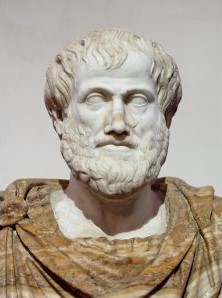
Aristotle (384-322 BC)


Aristotle was a Greek philosopher who is considered to be the first genuine scientist in history. His views and ideas influenced scientists and scholars in later years.  He was a student of Plato and is famous in history for teaching Alexander the Great. His work covers a wide range of subjects- physics, metaphysics, ethics, biology, zoology. His views on natural sciences, physical sciences were way ahead of his peers and formed the basis for the science and learning in those early times.


*Thanks for reading... if you like it then please like, share & leave a special comments of yours...

Best Special Forces in the world

10 Best Special Forces in the world


Special forces, or special operations forces are military units extremely trained to perform unconventional, typically insecure missions for a nation’s political, economic or military purposes. The origin of Special Forces dates back to the early twentieth century, with fighting models set up by German Brandenburgers during the World War II. Ranking the Best Special Forces from all over the world is a tough job. It’s just like trying to rank the best athlete from the world among the numerous different sports which require different skills and abilities. Throughout the worl, every country train special forces within their military. And all these special forces train their men to be the best of the best, to take the impossible task and make it possible. Here is a list of top 10 Best “SPECIAL FORCES” from around the world. All these renowned Special Forces are always surrounded by an air of mystery as they cannot be exposed to the general public.


10. MARCOS, (India)


The MARCOS (Marine Commando Force) is an elite special operations unit of the Indian Navy. It was created for conducting special operations such as Amphibious warfare, Counter-terrorism, Direct action, Special reconnaissance, Unconventional warfare, hostage rescue, Personnel recovery, Asymmetric warfare, Counterproliferation. The MARCOS is specially organised, trained and equipped for the conduct of special operations in a maritime environment.


9. GIS, (Italy)


The GIS (Gruppo di Intervento Speciale) is an elite special operations counter-terrorism tactical response unit inside the Italian Carabinieri military police. It was created by Italian State Police in 1978 to combat the growing terrorism threat. The unit is globally known for its sharp marksmanship. Currently the GIS, with one hundred or so soldiers, is tasked with anti-terrorism operations, security services and providing training.


8. EKO Cobra, (Austria)


EKO Cobra (Einsatzkommando Cobra) is Austria’s primary counter-terrorism special operations tactical unit. It was formed in 1978, primarily as a response to the attack on Israeli athletes at the 1972 Munich Olympics. This special tactical unit is involved mainly in counter-terrorism. The unit retains a low profile, despite their high-speed involvement in the war on terror. They were involved in a hostage rescue in the Graz-Karlau Prison in 1996 and numerous other operations. The EKO Cobra is the only Counter-Terrorism unit to end a hijacking while the plane was still in the air. They are considered by many as one of the best trained counter-terrorist units in the world.


7. GIGN, (France)


The GIGN (National Gendarmerie Intervention Group) is a special operations unit of the French Armed Forces. The unit is trained to perform counter-terrorist and hostage rescue missions in France or anywhere else in the world. It was formed after the Munich massacre in the 1971 Olympic Games. Its basic goal was to prepare for possible future responses to the extremely violent attacks. In 1973, the GIGN became a permanent force of men trained and equipped to respond to these kind of threats. It is renowned for its swift responses and proficient combat capability in hostage rescue and anti-terrorism operations. GIGN currently deployed for large-scale intervention, search and protection missions.


6. SSG, (Pakistan)


The SSG (Special Services Group) is a special operations force of the Pakistan Army. It is quite similar to the U.S. Army’s Special Forces and the British Army’s SAS. The unit was created in 1956, it also known as “Black Storks” a name derived from their unique headgear the “Maroon Beret”. The SSG considered one of the world’s best special forces because of their courage and bravery. As a Russian president once said that if he had Pakistan’s army and Russian weapons he could conquer all the world because they are very brave. The SSG has trained for these specific missions: Asymmetric Warfare, Special Operations, Counter-Proliferation, Unconventional Warfare, Foreign Internal Defense, Special Reconnaissance, Direct Action, Hostage Rescue, Counter-Terrorist and Personnel Recovery. Recently, SSG has been active in anti-terrorist operations in Pakistan’s restive western borders with Afghanistan and fighting Islamic extremists in Pakistani cities.


5. JW GROM, (Poland)


The JW GROM (Jednostka Wojskowa GROM) is Poland’s elite counter-terrorism unit. The unit was officially activated on July 13, 1990 in response to terrorist threats. GROM, which stands for “thunder” is one of the five special operation forces units of the Polish Armed Forces. They are trained to respond to a variety of threats and unconventional warfare roles, including anti-terrorist actions and projection of power behind enemy lines.


4. GSG 9, (Germany)


GSG 9 is a German counter-terrorism and special operations unit of the German Federal Police. It was officially established in 1973 after the mismanagement of the German Police to successfully free 11 Israeli athletes who were kidnapped in Munich during the Summer Olympic Games. GSG 9 is deployed in cases of hostage taking, kidnapping, terrorism and extortion. It also be used to secure locations, neutralize targets, track down fugitives and sometimes conduct sniper operations. The unit is very active in developing and testing methods and tactics for these missions. From 1972 to 2003 they reportedly completed over 1,500 missions,[1] discharging their weapons on only five occasions.


3. Delta Force, (United States)


1st Special Forces Operational Detachment-Delta (1st SFOD-D), popularly known as Delta Force, was officially approved in 1997 after numerous, well-publicized terrorist incidents in USA. It’s the best and one of the most secretive forces in the US. Modeled after the British 22 Special Air Service Regiment, or SAS. The founder/co-founder of SFOD-D was a former SAS operative who thought the US needed an elite force like the SAS. Delta Force’s primary tasks are counter-terrorism, direct action, and national intervention operations, although it is an extremely versatile group capable of conducting many types of clandestine missions, including, but not limited to, hostage rescues and raids.


2. Navy SEALs, (United States)


The Navy SEALs, also known as the United States Navy’s Sea, Air and Land Teams can trace their roots to World War II. SEALs are male members of the United States Navy, and are one of the United State’s most elite special Warfare Combatants. The CIA’s highly secretive Special Activities Division (SAD) and more specifically its elite Special Operations Group (SOG) recruits operators from the SEAL Teams. Joint Navy SEALs and CIA operations go back to the famed MACV-SOG during the Vietnam War. This cooperation still exists today and is seen in the wars in Iraq and Afghanistan. Most recent joint Navy SEALs and CIA operation in the finding and killing of Osama bin Laden in Pakistan.


1. SAS, (United Kingdom)


Special Air Service is one of the best Special Forces in UK. SAS was set up in 1941 during the Second World War and has served as a model for Special Forces around the world. It was reformed as part of the Territorial Army in 1947, and named the 21st Battalion, SAS Regiment. The Regular Army 22 SAS gained worldwide fame and recognition after successfully attacking the Iranian Embassy in London and rescuing hostages during the 1980 Iranian Embassy siege. It currently comprises one regular regiment and two territorial regiments. It,s primary tasks are counter-terrorism in peacetime and special operations in wartime.


*Thanks for reading... if you like it then please like, share & leave a special comments of yours...


Top 10 physicists of all time

Top 10 physicists of all time


Physics deals with analyzing all of nature to help us better understand the universe that we live in. Besides being one of the oldest quests of man, knowing and understanding how things work is a basic need of the world as it is today. Physicists everywhere have always tried to answer the questions of how and when our universe started off and what really makes it tick. Great theorists, experimentalists and thinkers have molded the shape of our world as it exists today with the help of their theories and experiments. Although most people wouldn’t think of it but a lot of the technology that comes alive is given birth to by theorists who make the breakthroughs through observation and calculation. Let us now look at top 10 physicists of all time and look at what their contributions are in shaping the macro and the micro world in which we so casually live in. 


10. Werner Heisenberg

Werner Heisenberg


Werner Heisenberg was a German physicist who made significant contributions to many areas of physics. His theoretical work makes up the base for one of the most important cogs in quantum theory, the uncertainty principle. He was born on the 5th of December 1901 and died on the 5th of February 1976. For his contributions to physics he was awarded the Nobel Prize in 1932. Besides pioneering the work behind the Uncertainty Principle he has also made significant contributions in the areas of nuclear physics, particle physics and quantum field theory.


9. Ernest Rutherford

Ernest Rutherford


Ernst Rutherford is known to the world as the father of nuclear physics. He was born on the 30th of August 1871 and died on the 19th of October 1937 in New Zealand. His contribution to chemistry is also significant and he received the Nobel Prize for chemistry in 1908. His gold foil experiment was the first practical splitting of an atom and he also discovered one of the basic sub atomic particles namely the proton.


8. Paul Dirac

Paul Dirac


Paul Dirac was an English theoretical physicist who laid the foundations for more than one study of physics. In his lifetime which spanned from 8th August 1902 to 20 October 1984 he held many positions across many esteemed universities around the world. He was also awarded the Nobel Prize in physics along with Erwin Schrodinger for their work in the formulation of one of the earliest version of the atomic theory. He also formulated a famous equation known as the Dirac Equation and has also contributed significantly to the discovery on anti matter.


7. Erwin Schrodinger

Erwin Schrodinger


Richard Feynman was born on the 11th of May 1911 and died on the 15th of February 1988 in the United States. He was one of the best known scientists and theoretical physicist of his time and is also rated as one of the top ten physicists of all time with a wide consensus. The most significant of his contributions are in the areas of particle physics, quantum electrodynamics and he has also laid the foundation stones for quantum computing and nanotechnology. He shared the Nobel Prize for physics with 2 other scientists for his contributions to the development of quantum electrodynamics.


5. James Clerk Maxwell

James Clerk Maxwell


James Clerk Maxwell was a Scottish physicist who is best known for his work in the area of classical electromagnetic theory. His work helped unite electricity, magnetic and optics into a single theory through a set of equations that are known as Maxwell’s Equations. This work is one of the most significant contributions to physics as we know it. He is also credited with laying the foundations of quantum mechanics. He was born on the 13th of June 1831 and died on the 5th of November 1879.


4. Michael Faraday

Michael Faraday


Faraday was a British born scientist, chemist and physicist who lived from 22 September 1791 to 25 August. He discovered the magnetic field and also discovered electromagnetic induction. Some of his experiments in physics and chemistry are regarded as the most groundbreaking work ever done in a lab anywhere and anytime. Although he did not have much higher education, he was highly intuitive and his powers of observation were unreal.


3. Max Planck

Max Planck


Max Planck was a German physicist who is known as the father of quantum theory which initiated a revolution in physics as it existed. He was awarded the Nobel Prize for his contributions to quantum physics in 1918. He was a highly respected and looked upon physicist in his lifetime and one of the greatest honors in theoretical physics known as the Max Planck medal is named after his excellent contributions. One of his most important contributions was the Planck’s constant which is one of the most important equation constants in theoretical physics.


2. Isaac Newton

Isaac Newton


Isaac Newton was an English scientist who is considered as one of the greatest men of science to have walked this earth. His contributions to the many branches of science that he delved into need no mention. His work with physics lays the foundation for classical mechanics and he formulated a theory that seemed to explain how our universe worked. He was also among the first to show that gravity was a significant force in our universe and that the earth was not the center of the universe.


1. Albert Einstein

Albert Einstein


German born Albert Einstein is one of the most well known names in science. One of the most famous equations of all time, which is known as the equivalence of mass and energy otherwise simply known as E = mc2. He is often known as the father of modern physics as his contributions in the field of relativity have shaped the way modern physics has come to be. His discoveries and theories were way ahead of his time and it took the world a good number of years to understand them. Even today we are still delving into the wonderful possibilities that Einstein’s theories opened up to the world.


*Thanks for reading... if you like it then please like, share & leave a special comments of yours...


Emerging Technologies 2026: The Innovations Changing Our World 🌍 Emerging Technologies 2026: The Innovations Changi...