Saturday, November 12, 2016

Education and class

America’s new aristocracy

As the importance of intellectual capital grows, privilege has become increasingly heritable


WHEN the candidates for the Republican presidential nomination line up on stage for their first debate in August, there may be three contenders whose fathers also ran for president. Whoever wins may face the wife of a former president next year. It is odd that a country founded on the principle of hostility to inherited status should be so tolerant of dynasties. Because America never had kings or lords, it sometimes seems less inclined to worry about signs that its elite is calcifying.

Thomas Jefferson drew a distinction between a natural aristocracy of the virtuous and talented, which was a blessing to a nation, and an artificial aristocracy founded on wealth and birth, which would slowly strangle it. Jefferson himself was a hybrid of these two types—a brilliant lawyer who inherited 11,000 acres and 135 slaves from his father-in-law—but the distinction proved durable. When the robber barons accumulated fortunes that made European princes envious, the combination of their own philanthropy, their children’s extravagance and federal trust-busting meant that Americans never discovered what it would be like to live in a country where the elite could reliably reproduce themselves.


Now they are beginning to find out, (see article), because today’s rich increasingly pass on to their children an asset that cannot be frittered away in a few nights at a casino. It is far more useful than wealth, and invulnerable to inheritance tax. It is brains.

Matches made in New Haven

Intellectual capital drives the knowledge economy, so those who have lots of it get a fat slice of the pie. And it is increasingly heritable. Far more than in previous generations, clever, successful men marry clever, successful women. Such “assortative mating” increases inequality by 25%, by one estimate, since two-degree households typically enjoy two large incomes. Power couples conceive bright children and bring them up in stable homes—only 9% of college-educated mothers who give birth each year are unmarried, compared with 61% of high-school dropouts. They stimulate them relentlessly: children of professionals hear 32m more words by the age of four than those of parents on welfare. They move to pricey neighbourhoods with good schools, spend a packet on flute lessons and pull strings to get junior into a top-notch college.

The universities that mould the American elite seek out talented recruits from all backgrounds, and clever poor children who make it to the Ivy League may have their fees waived entirely. But middle-class students have to rack up huge debts to attend college, especially if they want a post-graduate degree, which many desirable jobs now require. The link between parental income and a child’s academic success has grown stronger, as clever people become richer and splash out on their daughter’s Mandarin tutor, and education matters more than it used to, because the demand for brainpower has soared. A young college graduate earns 63% more than a high-school graduate if both work full-time—and the high-school graduate is much less likely to work at all. For those at the top of the pile, moving straight from the best universities into the best jobs, the potential rewards are greater than they have ever been.

None of this is peculiar to America, but the trend is most visible there. This is partly because the gap between rich and poor is bigger than anywhere else in the rich world—a problem Barack Obama alluded to repeatedly in his state-of-the-union address on January 20th (see article). It is also because its education system favours the well-off more than anywhere else in the rich world. Thanks to hyperlocal funding, America is one of only three advanced countries where the government spends more on schools in rich areas than in poor ones. Its university fees have risen 17 times as fast as median incomes since 1980, partly to pay for pointless bureaucracy and flashy buildings. And many universities offer “legacy” preferences, favouring the children of alumni in admissions.

Nurseries, not tumbrils

The solution is not to discourage rich people from investing in their children, but to do a lot more to help clever kids who failed to pick posh parents. The moment to start is in early childhood, when the brain is most malleable and the right kind of stimulation has the largest effect. There is no substitute for parents who talk and read to their babies, but good nurseries can help, especially for the most struggling families; and America scores poorly by international standards (see article). Improving early child care in the poorest American neighbourhoods yields returns of ten to one or more; few other government investments pay off so handsomely.

Many schools are in the grip of one of the most anti-meritocratic forces in America: the teachers’ unions, which resist any hint that good teaching should be rewarded or bad teachers fired. To fix this, and the scandal of inequitable funding, the system should become both more and less local. Per-pupil funding should be set at the state level and tilted to favour the poor. Dollars should follow pupils, through a big expansion of voucher schemes or charter schools. In this way, good schools that attract more pupils will grow; bad ones will close or be taken over. Unions and their Democratic Party allies will howl, but experiments in cities such as battered New Orleans have shown that school choice works.

Finally, America’s universities need an injection of meritocracy. Only a handful, such as Caltech, admit applicants solely on academic merit. All should. And colleges should make more effort to offer value for money. With cheaper online courses gaining momentum, traditional institutions must cut costs or perish. The state can help by demanding more transparency from universities about the return that graduates earn on their degrees.

Loosening the link between birth and success would make America richer—far too much talent is currently wasted. It might also make the nation more cohesive. If Americans suspect that the game is rigged, they may be tempted to vote for demagogues of the right or left—especially if the grown-up alternative is another Clinton or yet another Bush.


Evolution

Greater than the sum of its parts


It is rare for a new animal species to emerge in front of scientists’ eyes. But this seems to be happening in eastern North America.


LIKE some people who might rather not admit it, wolves faced with a scarcity of potential sexual partners are not beneath lowering their standards. It was desperation of this sort, biologists reckon, that led dwindling wolf populations in southern Ontario to begin, a century or two ago, breeding widely with dogs and coyotes. The clearance of forests for farming, together with the deliberate persecution which wolves often suffer at the hand of man, had made life tough for the species. That same forest clearance, though, both permitted coyotes to spread from their prairie homeland into areas hitherto exclusively lupine, and brought the dogs that accompanied the farmers into the mix.

Interbreeding between animal species usually leads to offspring less vigorous than either parent—if they survive at all. But the combination of wolf, coyote and dog DNA that resulted from this reproductive necessity generated an exception. The consequence has been booming numbers of an extraordinarily fit new animal (see picture) spreading through the eastern part of North America. Some call this creature the eastern coyote. Others, though, have dubbed it the “coywolf”. Whatever name it goes by, Roland Kays of North Carolina State University, in Raleigh, reckons it now numbers in the millions.


The mixing of genes that has created the coywolf has been more rapid, pervasive and transformational than many once thought. Javier Monzón, who worked until recently at Stony Brook University in New York state (he is now at Pepperdine University, in California) studied the genetic make-up of 437 of the animals, in ten north-eastern states plus Ontario. He worked out that, though coyote DNA dominates, a tenth of the average coywolf’s genetic material is dog and a quarter is wolf.

The DNA from both wolves and dogs (the latter mostly large breeds, like Doberman Pinschers and German Shepherds), brings big advantages, says Dr Kays. At 25kg or more, many coywolves have twice the heft of purebred coyotes. With larger jaws, more muscle and faster legs, individual coywolves can take down small deer. A pack of them can even kill a moose.

Coyotes dislike hunting in forests. Wolves prefer it. Interbreeding has produced an animal skilled at catching prey in both open terrain and densely wooded areas, says Dr Kays. And even their cries blend those of their ancestors. The first part of a howl resembles a wolf’s (with a deep pitch), but this then turns into a higher-pitched, coyote-like yipping.

The animal’s range has encompassed America’s entire north-east, urban areas included, for at least a decade, and is continuing to expand in the south-east following coywolves’ arrival there half a century ago. This is astonishing. Purebred coyotes never managed to establish themselves east of the prairies. Wolves were killed off in eastern forests long ago. But by combining their DNA, the two have given rise to an animal that is able to spread into a vast and otherwise uninhabitable territory. Indeed, coywolves are now living even in large cities, like Boston, Washington and New York. According to Chris Nagy of the Gotham Coyote Project, which studies them in New York, the Big Apple already has about 20, and numbers are rising.

Even wilier

Some speculate that this adaptability to city life is because coywolves’ dog DNA has made them more tolerant of people and noise, perhaps counteracting the genetic material from wolves—an animal that dislikes humans. And interbreeding may have helped coywolves urbanise in another way, too, by broadening the animals’ diet. Having versatile tastes is handy for city living. Coywolves eat pumpkins, watermelons and other garden produce, as well as discarded food. They also eat rodents and other smallish mammals. Many lawns and parks are kept clear of thick underbrush, so catching squirrels and pets is easy. Cats are typically eaten skull and all, with clues left only in the droppings.

Thanks to this bounty, an urban coywolf need occupy only half the territory it would require in the countryside. And getting into town is easy. Railways provide corridors that make the trip simple for animals as well as people.

Surviving once there, though, requires a low profile. As well as having small territories, coywolves have adjusted to city life by becoming nocturnal. They have also learned the Highway Code, looking both ways before they cross a road. Dr Kays marvels at this “amazing contemporary evolution story that’s happening right underneath our nose”.

Whether the coywolf actually has evolved into a distinct species is debated. Jonathan Way, who works in Massachusetts for the National Park Service, claims in a forthcoming paper that it has. He thinks its morphological and genetic divergence from its ancestors is sufficient to qualify. But many disagree. One common definition of a species is a population that will not interbreed with outsiders. Since coywolves continue to mate with dogs and wolves, the argument goes, they are therefore not a species. But, given the way coywolves came into existence, that definition would mean wolves and coyotes should not be considered different species either—and that does not even begin to address whether domestic dogs are a species, or just an aberrant form of wolf.

In reality, “species” is a concept invented by human beings. And, as this argument shows, that concept is not clear-cut. What the example of the coywolf does demonstrate, though, is that evolution is not the simple process of one species branching into many that the textbooks might have you believe. Indeed, recent genetic research has discovered that even Homo sapiens is partly a product of hybridisation. Modern Europeans carry Neanderthal genes, and modern East Asians the genes of a newly recognised type of early man called the Denisovans. Exactly how this happened is unclear. But maybe, as with the wolves of southern Ontario, it was the only way that some of the early settlers of those areas could get a date.


Monday, October 24, 2016

Ten discoveries that no one can explain

Ten discoveries that no one can explain


The history of the world is full of surprising mysteries. None of us will live long enough to see them all solved. But it’s always interesting to have a look at some of the truly bizarre things which lie beneath the surface.


1. Moa Birds


Moa birds were flightless birds that used to inhabit New Zealand, which became extinct around the year 1500. They were killed off, according to one theory, by the Māori people. During an expedition in the twentieth century, scientists stumbled across a very large claw from one of the birds which had somehow been incredibly well preserved for centuries.


2. The Temple Complex of Saksaywaman, Peru


The perfect stonework of this ancient temple complex, which was completed without the use of a single drop of mortar, is truly amazing. In some cases, it’s impossible to pass even a piece of paper between the stones. Every block, moreover, has a smooth surface and rounded corners. How was it constructed? No one knows.


3. Gate of the Sun, Bolivia


The Gate of the Sun can be found in Tiwanaku — an ancient and mysterious city in Bolivia. Some archaeologists believe that it was the centre of a huge empire during the first millenium AD. No one has any idea what the carvings on the Gate are meant to mean. Possibly, they have some astrological or astronomical significance.


4. The Longyou Caves, China


These caves were gouged out of sandstone by human hands. Such difficult work would have required the participation of thousands of people. Yet there is no mention of these caves, or the methods used to construct them, anywhere in historical records.


5. The Unfinished Obelisk, Egypt


This obelisk initially began to be carved straight out of a rock face, but it appears that it began to crack. It was left in this condition, unfinished. Its size is simply staggering!


6. The Underwater City of Yonaguni, Japan


This ancient complex was discovered by chance by diving instructor Kihachiro Aratake. The underwater city has confounded all scientific theories. The rock from which it is carved was submerged underwater about 10,000 years ago — long before even the Egyptian pyramids were erected. Some archaeologists believe that during this primitive era, people still huddled in caves and lived off edible roots rather than hunted; they certainly couldn’t erect stone cities.


7. Mohenjo-daro (’The Mound of the Dead’), Pakistan


The secret of this city’s downfall has perplexed experts for decades. In 1922, the Indian archaeologist R. D. Banerji discovered ancient ruins on one of the islands in the Indus River. Questions arose: how was this great city destroyed? What happened to its inhabitants? Numerous excavations have not offered any answers.


8. L’Anse aux Meadows, Canada


This archaeological site in Canada was once a settlement founded by the Vikings about a thousand years ago. The fact that it exists indicates that the Scandinavian seafarers reached North America long before the birth of Christopher Columbus.


9. Stone-Age Tunnels


The discovery of an extensive network of underground tunnels, which stretch across all of Europe from Scotland to Turkey, shows that stone-age communities were not simply hunter-gatherers. But the real purposes of the tunnels is still a mystery. Some researchers believe they were used as protection against predators, whilst others believe they provided a way to travel around in safety, protected from the rigours of the weather and various conflicts.


10. The giant stone spheres of Costa Rica


These mysterious stone formations are intriguing not only for their perfectly spherical shape, but also on account of their unknown origins and purpose. They were discovered in the 1930s by workers clearing the jungle from a banana plantation. Local legends suggested that the mysterious spheres contained hidden gold, but they turned out to be empty.

Koh-i-Noor to Hope: 5 of the most expensive diamonds in the world will blind you with their beauty

Koh-i-Noor to Hope: 5 of the most expensive diamonds in the world will blind you with their beauty

From their price to their size, not just the legendary Koh-i-Noor, all these diamonds will blind you with their beauty!


With four countries including India laying the claim on the Koh-i-Noor, considered to be the most expensive diamond in the world, the stone's changed hands time and again before ending up in Britain. While the diamond belonged to the Mughals who ruled the Indian subcontinent, it was snatched by Persian ruler Nadir Shah who invaded the country in the 18th century.
Soon after the diamond came in the possession of Ahmad Shah Durrani, whose descendant Shuja Shah Durrani brought the Koh-i-noor back to India in early 19th century after which the diamond ended up with Maharaja Ranjit Singh--the founder of the Sikh empire.

While the ruler had willed the diamond to the Jagannath Temple in Puri, his will wasn't executed by the East India Company. After the Sikhs lost in the Second Anglo-Sikh War, the stone came in the possession of the British empire.
Even today, every time the news of any political exchange between India and Britain breaks out, the Indian population nevers fails to point out that their diamond be returned to the country. However it's only after a PIL filed by All India Human Rights & Social Justice Front, regarding the diamond's return to which the country's Solicitor General Ranjit Kumar's replied, "It was given voluntarily by Ranjit Singh to the British as compensation for help in the Sikh Wars. The Koh-i-Noor is not a stolen object," that the subject has gained momentum again.
The Koh-i-Noor means the Mountain of Light in Persian and can be seen at the Tower of London, adorning the Queen's crown. However the 105.60 carat diamond isn't the only known stone in the world.


Here are the nine most expensive diamonds in the world...


Sancy

sancy


Weighing 55.23 carats, the priceless pale yellow diamond again has Indian origins and is considered to be one of the first large diamonds to be cut with symmetrical facets. The diamond is on display at the Apollo Gallery at the Louvre.


Cullinan

Cullinan


Valued at USD 400 million or Rs 26,62,13,80,000, the Cullinan Diamond weighs 3,106,75 carats and is famous for being the largest gem-quality diamond found in the world. It was cut into nine diamonds, of which the Cullinan I and Cullinan II are most famous and can be viewed at the Tower of London as they adorn the Sovereign's Scepter with Cross and the Imperial State Crown.


Hope


Hope


Believed to have originated in India, the diamond weighs 45.52 carats and is on display at the National Natural History Museum in Washington, D.C. The legendary diamond is famous for its deep-blue colour and gives a red glow after being exposed to ultraviolet light. It's currently valued at USD 350 million or Rs 23,28,95,07,500 and has also made a name for itself as a cursed stone that brings bad luck or death to its owners.


De Beers Centenary Diamond

De Beers Centenary Diamond


Valued at USD 100 million or Rs 6,65,40,45,000, the De Beers Centenary Diamond is among the most beautiful diamonds in the world to have received grade D rating by the Gemological Institute of America for being internally and externally flawless and for belonging to the highest grade of colourless diamonds. The sparkler has been cut into a heart shape without a groove.


*Thanks for reading... if you like it then please Subscribe, like, share & leave a special comments of yours...

The world's top 10 biggest diamond mines

The world's top 10 biggest diamond mines


The ten largest diamond mines in the world by measurable reserves contain more than one billion carats of recoverable diamonds. Russia is home to half of the world's biggest diamond mines, while Botswana houses two; including the world's largest diamond producing mine Orapa. Mining-technology.com profiles the top 10 biggest mines based on contained diamond reserves and excluding alluvial diamond mining projects.


Jubilee


Jubilee, also known as the Yubileyny diamond mine, located in Sakha (Yakutia), Republic of Russia, is the biggest diamond mine in the world. The mine was estimated to contain more than 153 million carats (Mct) of recoverable diamonds, including 51Mct of probable underground reserves as of January 2013.

The open-pit diamond mine is owned and operated by the Aikhal mining and processing division of Russia's state-owned diamond company Alrosa.

The mine has been in production since 1986. It extracts diamond ore from the Yubileynaya kimberlite pipe, which was estimated to contain Joint Ore Reserves Committee (JORC)-compliant probable reserves of 107.163 million tonnes (Mt) grading 0.90 carat per tonne (ct/t) as of July 2013.

Jubilee diamond mine produced 10.4Mt of ore in 2012. The open pit mine is presently operating at a depth of 320m, but is expected to eventually reach 720m.

Related Suppliers: Drilling and Blasting

Udachny


Udachny diamond mine, also located in the Yakutia region of Russia, ranks as the world's second largest diamond mine by reserve size. Estimated diamond reserves at the mine exceeded 152Mct as of January 2013.

The mine is owned by Alrosa and operated by its Udachny mining and processing division. The mine extracts ore from the Udachnaya Kimberlite pipe, whose JORC-compliant diamond reserves as of July 2013 were estimated at more than 120Mct, including 7.3Mct of proven reserve from the ore stockpile. Udachny is bigger than Jubilee in terms of JORC reserve estimates.

The Udachnaya pipe discovered in 1955 is the largest diamond deposit in Russia. Udachny, which is one of the deepest open pit mines in the world, produced 10Mct of diamonds a year until 2011. The open pit operation is, however, expected to close in 2014, while the underground operation is expected to continue for more than 30 years.

Mir


Mir or Mirny, another diamond mine in the Yakutia region of Russia, is the third biggest diamond mine in the world. The underground diamond mine was estimated to contain more than 141Mct of probable diamond reserves as of January 2013.

The diamond mine is owned and operated by the Mirny mining and processing division of Alrosa. It extracts diamond ore from the Mir kimberlite pipe, whose JORC reserve stood at 29.586Mt grading 3.29ct/t diamond as of July 2013.

The Mir pipe was discovered in 1955. Open-pit mining started in 1957 and closed in 2001. Underground mining at Mir has been underway since 2009. The mine produced 497,000 tonnes of ore in 2012. The production is expected to reach 1Mt by 2014.

Related Suppliers: Power Supply, Engines, Transmission and Drives


Argyle


Argyle diamond mine located in the Kimberley region of Western Australia ranks as the world's biggest diamond mine if JORC reserves alone are taken into account. The recoverable diamond reserve at Argyle as of December 2012 was estimated to be 140Mct (67Mt grading 2.1ct/t diamond).

The diamond mine, owned by Rio Tinto, has been in production since 1983. Argyle is currently transitioning from open pit to underground operations to access diamonds at depth. Argyle Underground will be the first block cave mine in Western Australia.

At peak production Argyle Underground is expected to produce 20Mct of diamonds a year, which will make it the largest diamond producing mine in the world.

The open pit mine has produced more than 791Mct of diamonds in its life, which the company believes will extend beyond 2020.

Catoca


Catoca diamond mine in Angola ranks as the fifth biggest diamond mine in the world. The Catoca open-pit located near Saurimo, around 840km east of Luanda, is estimated to contain up to 130Mct of mineable diamonds.

The diamond mine is operated by Sociedade Mineira de Catoca, a joint venture of Angola's state-owned diamond company Endiama (32.8%), Alrosa (32.8), as well as China and state oil producer Sonangol (18%) and Odebrecht of Brazil (16.4%). The mine has been operational since 1993.

Catoca mine produced 6.5Mct of diamonds from around 10Mt of ore in 2012, which accounted for about 70% of Angola's total diamond output. The open-pit currently operating at a depth exceeding 200m is scheduled to reach at least 600m deep. The mine life of Catoca is extendable up to 30 years.

Related Suppliers: Crushers, Breakers and Grinding Mills


Venetia


Venetia diamond mine located 80km from Musina in Limpopo Province of South Africa ranks as the world's sixth largest diamond mine. Venetia's diamond reserves as of December 2012 stood at more than 102Mct. The open pit reserves are estimated to be 32.8Mct (33.6Mt grading 0.975ct/t diamond) and the underground diamond reserves are estimated at 70Mct (91.4Mt grading 0.765ct/t diamond).

Venetia is the largest diamond producing mine in South Africa. It produced 3.066Mct of diamonds from 5.618Mt of ore in 2012. The deposit comprises of 12 kimberlite pipes.

The mine is owned and operated by De Beers and has been in production since 1992. The open-pit operation is expected to continue up to 2021, after which it will be switched over to underground mining. The mine life of Venetia Underground is expected to be more than 20 years.

Grib


Grib diamond mine, which is yet to commence commercial production, is Russia's fourth largest and world's seventh largest diamond mine. The estimated diamond reserve of the mine exceeds 98Mct.

The mine is being developed by Russian oil company Lukoil through its diamond-mining subsidiary Arkhangelskgeoldobycha (AGD). The mine will extract the Grib pipe situated at Verkhotina in the Arkhangelsk region of north-western Russia.

Diamond mining at Grib is expected to begin by early 2014. The annual diamond production at Grib is anticipated to be 4Mct. The mine is planned to go underground after 16 years of open-pit operation. The mine is expected to be put up for sale after the commencement of production.

Jwaneng


Jwaneng diamond mine in African country Botswana ranks as the eighth biggest diamond mine in the world. The open-pit mine located 160 miles south-west of Gaborone in south central Botswana was estimated to contain diamond reserves of 88.3Mct (70.1Mt grading 1.26ct/t diamond) as of December 2012.

Jwaneng is considered to be the world's richest diamond mine in terms of value, and is owned by Debswana, a partnership between the De Beers and the Government of Botswana. The mine has been in production since 1982. It accounts for up to 70% revenue of Debswana, which operates four diamond mines in Botswana.

The mine produced 8.172Mct of diamonds in 2012 and 10.641Mct in 2011. The current operating depth of the Jwaneng pit is 350m. The mine is, however, expected to reach a depth of 625m by 2017. A major extension project, namely Cut-8, has been underway at Jwaneng since 2010, which will extend the mine's life to at least 2025.

Orapa


Orapa diamond mine located 240km west of Francistown city in Central Botswana is the ninth largest diamond mine in the world by reserve. The open-pit mine was estimated to contain 85.7Mct of diamond reserves (146.1Mt grading 0.587ct/t diamond) as of December 2012.

Orapa has been in production since 1971. It is the oldest of the four diamond mines operated by Debswana. The kimberlite pipe mined by Orapa is one of the largest in the world. It covers an area of 118km² at the surface.

Orapa produced 11.089Mct of diamonds in 2012, compared to 11.158Mct in 2011. Orapa is the world's biggest diamond mine based on 2012 production. The mine achieved a record production of 17.3Mct in 2006.

Botuobinskaya


Botuobinskaya diamond mine, due to commence production in 2015, is located in the Nakyn kimberlite field, around 200km north-west of Nyurba in the Yakutia region of Russia.

The mine will extract from the Botuobinskaya pipe which contains 70.9Mct of JORC-compliant diamond reserves (13.839Mt grading 5.13ct/t diamond).

The mine is owned and operated by Nyurba mining and processing division of Alrosa. Alrosa's Nyurba division has been mining the Nyurbinskaya pipe three kilometres away from the Botuobinskaya pipe since 2000.

The JORC reserve of Nyurbinskaya (Nyurba) open-pit mine was estimated at 40.394Mct as of July 2013. Nyurba mine produced 7.955Mct of diamond in 2012.

Striping operations at the Botuobinskaya pipe began in December 2012. The Botuobinskaya mine is expected to produce 1.5Mct of diamonds annually for more than 40 years from the start of operations.


*Thanks for reading... if you like it then please Subscribe, like, share & leave a special comments of yours...

Saturday, October 15, 2016

Top 10 Most Brilliant Architects in The World


Top 10 Most Brilliant Architects in The World


Building and construction is known since millions of years. Many features and styles appear in the building. Architects have shown their skills and talents in their designs. Times show magnificent works appeared in pyramids, houses, temples … etc. There are many famous architects, whose works are telling. Here is the list of the top 10 most successful architects.


10

Daniel Libeskind


He is a Polish architect who was born in 1946. Libeskind joined Bronx High School of Science and later Cooper Union for architecture. He worked for Richard Meier for a short period of time. Cooperating with his wife Nina Lewis, Libeskind established Studio Daniel Libeskind in 1989. Moreover, the Jewish Museum in Berlin was Libeskind’s most important global work that gains him too much success. He offered other prominent works such as the Grand Canal Theatre in Dublin, as well as the Imperial War Museum North in England.


09

Sir Norman Foster


Sir Norman Foster is a graduate of Manchester University School of Architecture as well as Yale University’s Masters in Architecture program. In 1967, he established Foster + Partners. In 1999, he won the Pritzker Prize. Foster + Partners has gained more than 470 awards for its excellence, such as Gold Medals from the RIBA and the AIA. Foster’s most distinguished works embrace the Beijing Airport, , Boston Museum of Fine Arts, along with the Smithsonian Institute in Washington.


08

Renzo Piano


He is an Italian architect. After graduating from Politecnico di Milano School of Architecture, Renzo was an employee in the company of Louis Khan in Philadelphia. His magnificent works involve the Centre Georges Pompidou in Paris as well as the California Academy of Sciences. For awards, Piano received the Pritzker Prize in 1998 along with the AIA Gold Medal in 2008.


07

Rem Koolhaas


His fame is due to his avant-garde and weird buildings. In 1975 Koolhaas, established OMA, a cooperative hothouse research lab. Koolhaas is an author, a theorist, a cultural researcher as well as a professor at Harvard. From the most significant works are the Seattle Central Library, also the CCTV Headquarters in Beijing.


06

Zaha Hadid


She received the Pritzker Prize award in 2004. She was the first and only female to gain the award. She was assigned to design Cincinnati’s Rosenthal Center for Contemporary Art. The building is described as the most imperative new building in America from the time when the Cold War exists. Many projects are hers such as public transportation, libraries as well as opera houses.


05

Cesar Pelli


He was born in 1926 in Argentina. He attended the University of Tucmán, where he learned architecture. Pelli joined the working team in the office of Eero Saarinen and Associates. He was a project designer for the famed TWA terminal at JFK Airport. Pelli and his wife released Cesar Pelli. Moreover, he gained the AIA Gold Medal for his architectural designs. Pelli’s most outstanding works are the World Financial Center in NYC, and the Petronas Twin Towers.


04

Walter Gropius


He is famous as he is the first director of the high-status design school, the Bauhaus. Gropius designed the school’s second place in Dessau, Germany. In 1937, he was request to lecture at Harvard University. Gropius along with Marcel Breuer established a joint architectural company. They designed many remarkable works from which the Pennsylvania Pavilion for the 1939 World’s Fair is marvelous. The Royal Institute of British Architects gave him Gold Medals.


03

Eero Saarinen


He was born in Finland. Saarinen started working at his father’s architecture office. At Cranbrook he got acquainted with Charles Eames and the two designed new furniture forms. Saarinen and Eames participated in the “Organic Design in Home Furnishings”. Saarinen settled on to center on Architecture than furniture, producing the TWA terminal at JFK Airport as well as Dulles International Airport.


02

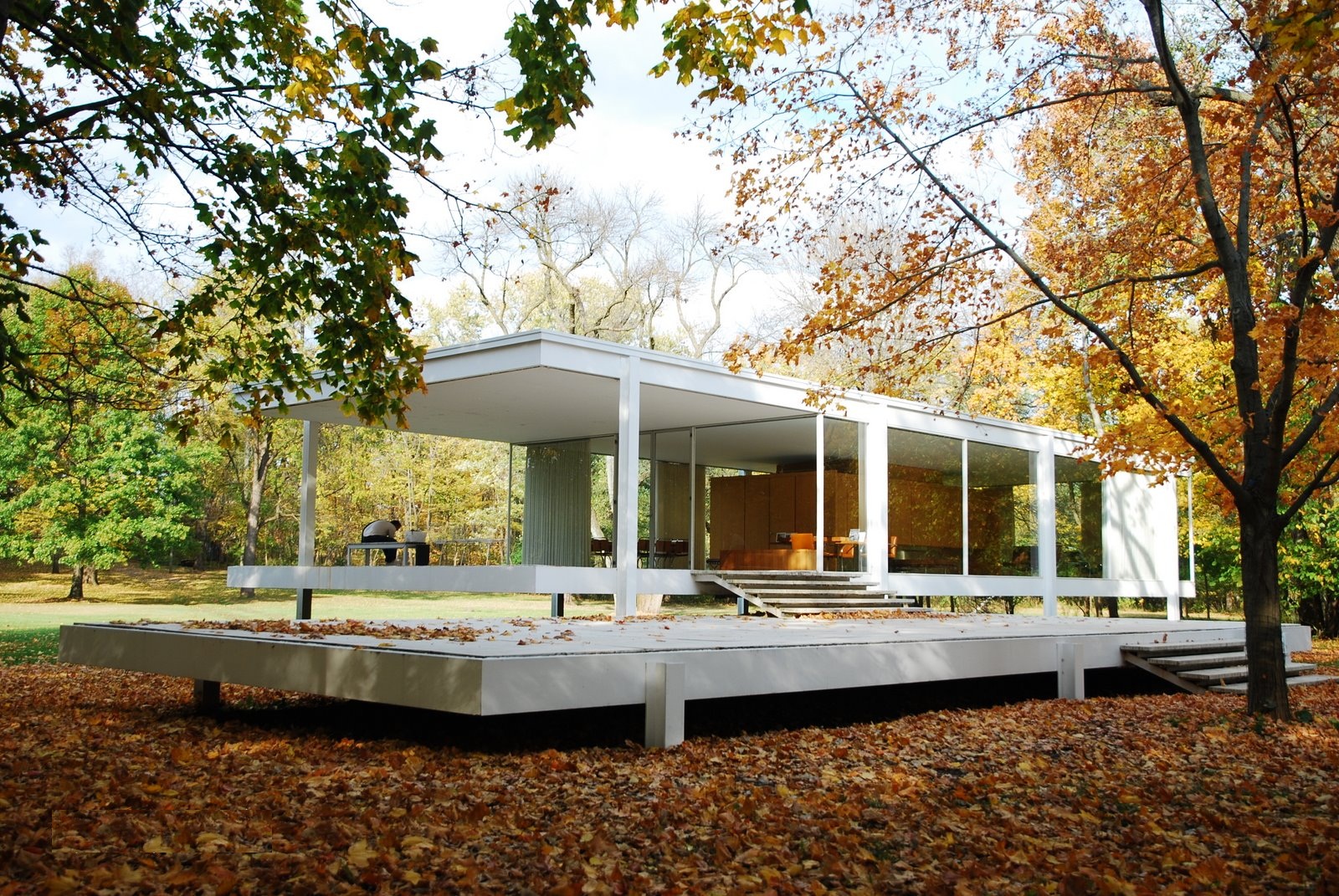
Ludwig Mies van der Rohe


One of Mies’ most celebrated works was his Barcelona Pavilion at the International Exposition. He started one of the most victorious professions. He designed The Farnsworth House. He received the AIA Gold Medal as well as the Royal Gold Medal for his works.


01

 Michael Graves


He is one of the post-modernists. He was very interested in painting that affected his architecture. Graves joined the working team of Carl Strauss and Ray Rousen. His noteworthy works include the Portland Building in Oregon. When it comes to the awards, he received the AIA Gold Medal in 2001.


*Thanks for reading... if you like it then please Subscribe, like, share & leave a special comments of yours...

Thursday, October 13, 2016

Top-earning dead celebrity Michael Jackson


Top-earning dead celebrity Michael Jackson


Michael Jackson

Late King of Pop Michael Jackson has topped an annual list of top-earning dead celebrities for the fourth straight year.

He has surpassed his fellow musical icons Prince and David Bowie, who passed away earlier this year, in the list, which has been released by Forbes magazine, reported theguardian.com.

Jackson, who died in 2009, raked in a bumper $825 million in earnings for the 12 months ending October 1, the report said.

The earnings came mostly from the Jackson estate's $750 million sale of the late singer's remaining stake in the Sony/ATV music publishing catalog -- which includes the rights to many Beatles songs -- to Sony Corporation.

Forbes's estimates were based on pre-tax income, before management and legal expenses, and were compiled through interviews with estate experts and data on record sales, touring and movie earnings.

Sales of Prince's albums soared after the musician died because of accidental drug overdose in April. Forbes ranked him in fifth place overall with estimated earnings of $25 million, just below Elvis Presley, with $27 million.

Bowie, who died of cancer in January came days after a new album release, outsold both Presley and Jackson in albums and singles in 2016, but the British singer's overall estimated earnings were $10.5 million, Forbes said.

Golf legend Arnold Palmer, who died in September at age 87, claimed the third spot with earnings of $40 million, mostly from licensing and endorsements of his signature Arnold Palmer iced tea and lemonade drink, leisure wear label, and golf course designs.


*Thanks for reading... if you like it then please like, share & leave a special comments of yours...

Emerging Technologies 2026: The Innovations Changing Our World 🌍 Emerging Technologies 2026: The Innovations Changi...